Ethical Guidance for Research among People with Cognitive Impairment

The “Ethical Guidance for Research among People with Cognitive Impairment” has been issued by the National Health Research Ethics Committee. The document contains guidelines on how to the conduct ethical review of research involving persons with cognitive impairment in Nigeria. These are largely persons that may be unable to give informed consent for their participation in research due to their impairment. This includes persons such as those with mental disability (schizophrenia, depression, anxiety, etc.) and those with neurological disorders (Parkinson’s Disease, Dementia, Alzheimer’s Disease, etc.) among others


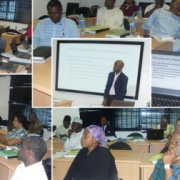
UMB NHREC WorkShop

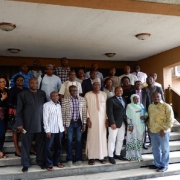
Health research ethics capacity-building in Nigeria and the Netherlands: overlaps, gaps and directions for future partnership

n recent years there have been increasing bilateral relations between Nigeria and the Netherlands in different sectors of the economy; however, there seems to be little exchanges at the theoretical-normative levels. In this respect, health research ethics is a possible and plausible common ground of exchanging ideas and experiences while building cooperation and partnership. Diseases, infections and health pandemic ravaging the world are heightening the need for good science and medical research with integrity. In protecting research subjects in rural and urban areas from abuses and unwarranted risks, medical research ethics committees are statutorily established across states in the world to regulate the activities of clinical researchers, provide guidance on medical research integrity and facilitate qualitative healthcare delivery. While Nigeria and the Netherlands are not exceptions to the universal ideals of having medical research ethics committees, the histories, circumstances of emergence, configuration and structures, powers, roles and limitations of such committees in the two countries are diverse with some common interesting grounds, worthy of investigation. Currently, there is no study profiling the variations, the extent, the contents and overlaps of the mechanism for research ethics capacity-building in Nigeria and the Netherlands. Nor are there studies interrogating the areas of win-win partnership in research ethics capacity-building and policies between the two countries. Understanding the ambience, contents and mechanisms of capacity-building in research ethics in each of these countries is critical not only to improved bilateral relations and exchanges in medical research and healthcare but also in shaping future directions in the areas of value orientation, curriculum adaptation and health policy regulations. Thus, through philosophical methods of content analysis, critical review of literatures and comparative evaluation, this paper aims to investigate the areas of overlaps, gaps and the strategic lessons that can impact future partnership in ethical biomedical researches in Nigeria and the Netherlands. This paper argues that the efficiency of health research ethics committees is, among other things, a function of the capacity, skills, training, the goodwill of the stakeholders, and the principles underlying research ethics practices. In achieving the UN sustainable health development goals in Nigeria, leveraging on the medical research ethics models, functions, and institutionalization in the Netherlands deserves to be taken seriously. The Netherlands can gain comparative insights from the value placed on the role of culture in minimizing biomedical research misconduct in Nigeria. In both contexts, there are potential models of cooperation that can be calibrated.

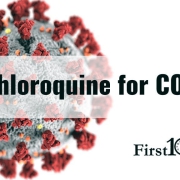
A nice postStatement on the Use of Chloroquine and other Drugs for Treating COVID-19A nice post

The COVID-19 pandemic has shown the urgent need for the expansion of existing knowledge on the COVID-19 virus and the development of a cure. Although there is no known cure for the virus, scientists are currently investigating the use of chloroquine for the treatment of patients showing mild-to-moderate symptoms of COVID-19. Chloroquine has previously been […]

Monitoring COVID-19 Impact on Nigerian Households

Nigeria was among the first countries in Sub-Saharan Africa to identify COVID-19 (coronavirus) cases and has since implemented strict measures to contain the spread of the virus. At the same time, oil prices plummeted by 60% following the spread of the global pandemic. As the oil sector accounts for the bulk of Nigerian government revenue, this collapse in prices has profound implications for the economy.

The federal government is confronted with the simultaneous challenge of combatting the public health crisis of the pandemic alongside trying to bolster a weakening economy. Given the mounting evidence that the social and economic impacts of these twin crises are likely to be significant, the government is ramping up policy interventions that can help mitigate such negative impacts. Alleviating the impacts of the COVID-19 crisis is vital for preventing poverty from deepening and increasing in Nigeria; before the crisis, approximately 4 in 10 Nigerians were living below the national poverty line, and millions more were living just above the poverty line, making them vulnerable to falling back into poverty when shocks occur.

To provide the government with timely evidence to guide the policy response, a new high-frequency survey – the Nigeria COVID-19 National Longitudinal Phone Survey (COVID-19 NLPS) – has been initiated in Nigeria. This survey is being implemented by the National Bureau of Statistics with technical support from the World Bank and is designed to measure and monitor the economic and social impacts of the COVID-19 crisis by tracking households’ welfare and behavior every month over a period of 12 months. The survey has a panel structure, such that it follows a representative sample of Nigerian households to assess how key indicators that may underpin the overall policy response are changing over time.

Household COVID-19 monitoring survey

The COVID-19 NLPS collects a wide range of information from households across Nigeria. The sample, which is nationally representative and covers both urban and rural areas, was drawn from the 2018/19 General Household Survey Panel (GHS-Panel), so vital background information on each household was already available.

The survey covers important topics including knowledge and concerns about the pandemic, access to food and other basic needs, employment and income loss, and safety nets and coping strategies. Its design is flexible, such that the topics covered can be altered according to evolving needs, priorities, and insights from emerging data. The survey is implemented using the Survey Solutions software for Computer Assisted Telephone Interviewing, this allows for faster access to the data and dissemination of results.

Policy Statement Regarding Enrollment of Children in Research in Nigeria (PS2.1016)A nice entry

NHREC issues policy guidelines from time to time to address emerging issues in research ethics or existing ones that require further clarification.

The ethical issue(s) of concern in this note relates to the enrolment of children in research studies. This is an interim note to guide researchers until the complete guidance on research with children is issued by NHREC

You can download using the link below


TRREE Training

Relevant TRREE (Training And Resources in Research Ethics Evaluation) online ethics training courses. For all categories of researchers, the following modules should be completed :

  1. Module 1 – Introduction to research
  2. Module 3.1 – Informed consent
  3. The Nigeria module under the continents/countries category.

Below are stepwise guides and algorithm for the TRREE ethics training courses. Investigators wishing to obtain required ethics training certificates for the purposes of submitting applications for ethics review to NHREC could choose from either the CITI or TRREE trainings to fulfill this requirement.

How to register for the TRREE ethics trainings

  • Click on http://elearning.trree.org/ to go to the TRREE home page
  • On the home page click the create new account link to create your own account
  • Upon filling the new account form an email will be sent to your email address immediately
  • Read your email, and click on the web link it contains.
  • Your account will be confirmed and you will be logged in.
  • Now, select the course you want to participate in.
  • If you are prompted for an “enrolment key” – use the one that your teacher has given you. This will “enrol” you in the course.
  • You can now access the full course. From now on you will only need to enter your personal username and password (in the form on this page) to log in and access any course you have enrolled in.

Policy Statement on Biobanks in Nigeria

Lorem ipsum dolor sit amet, consectetuer adipiscing elit. Aenean commodo ligula eget dolor. Aenean massa. Cum sociis natoque penatibus et magnis dis parturient montes, nascetur ridiculus mus. Donec quam felis, ultricies nec, pellentesque eu, pretium quis, sem.

  • Policy Statement on Storage of Human Samples in
    Biobanks and Biorepositories in Nigeria (PS1.02013)

    • NHREC issues policy guidelines from time to time to address emerging issues in
      research ethics.
    • The ethical issues of concern with bio-banks in this note relates to appropriate
      consent for samples being submitted for deposition in the bio-bank, appropriate
      release of samples, as well as appropriate use of samples released at destination
      sites.
    • Other issues may be included as bio-banks develop in the future.

A nice post

Lorem ipsum dolor sit amet, consectetuer adipiscing elit. Aenean commodo ligula eget dolor. Aenean massa. Cum sociis natoque penatibus et magnis dis parturient montes, nascetur ridiculus mus. Donec quam felis, ultricies nec, pellentesque eu, pretium quis, sem.

Nulla consequat massa quis enim. Donec pede justo, fringilla vel, aliquet nec, vulputate eget, arcu. In enim justo, rhoncus ut, imperdiet a, venenatis vitae, justo. Nullam dictum felis eu pede mollis pretium. Integer tincidunt. Cras dapibus. Vivamus elementum semper nisi. Aenean vulputate eleifend tellus. Aenean leo ligula, porttitor eu, consequat vitae, eleifend ac, enim.

Read more